
Introduction
As staircase installation specialists, we understand that staircases are one of the few building elements where structure, finish, safety and design all come together. People use them every day, often without a second thought, yet any inconsistency in levels, alignment or finish quickly becomes noticeable.
Staircases are experienced differently from most other finishes within a building. People naturally become more aware of each step, which means even small variations in levels, alignment or finish can affect both comfort and safety.
What looks simple is often far more complex behind the scenes. Delivering a staircase requires careful coordination between substrates, materials, tolerances and surrounding finishes to achieve a consistent and durable result.
Every staircase comes with its own challenges, shaped by the material, geometry and site conditions. Our approach focuses on understanding those conditions early and developing an installation strategy that works both technically and visually.
Starting Below the Surface
The final result of a staircase is often determined long before the finish is installed.
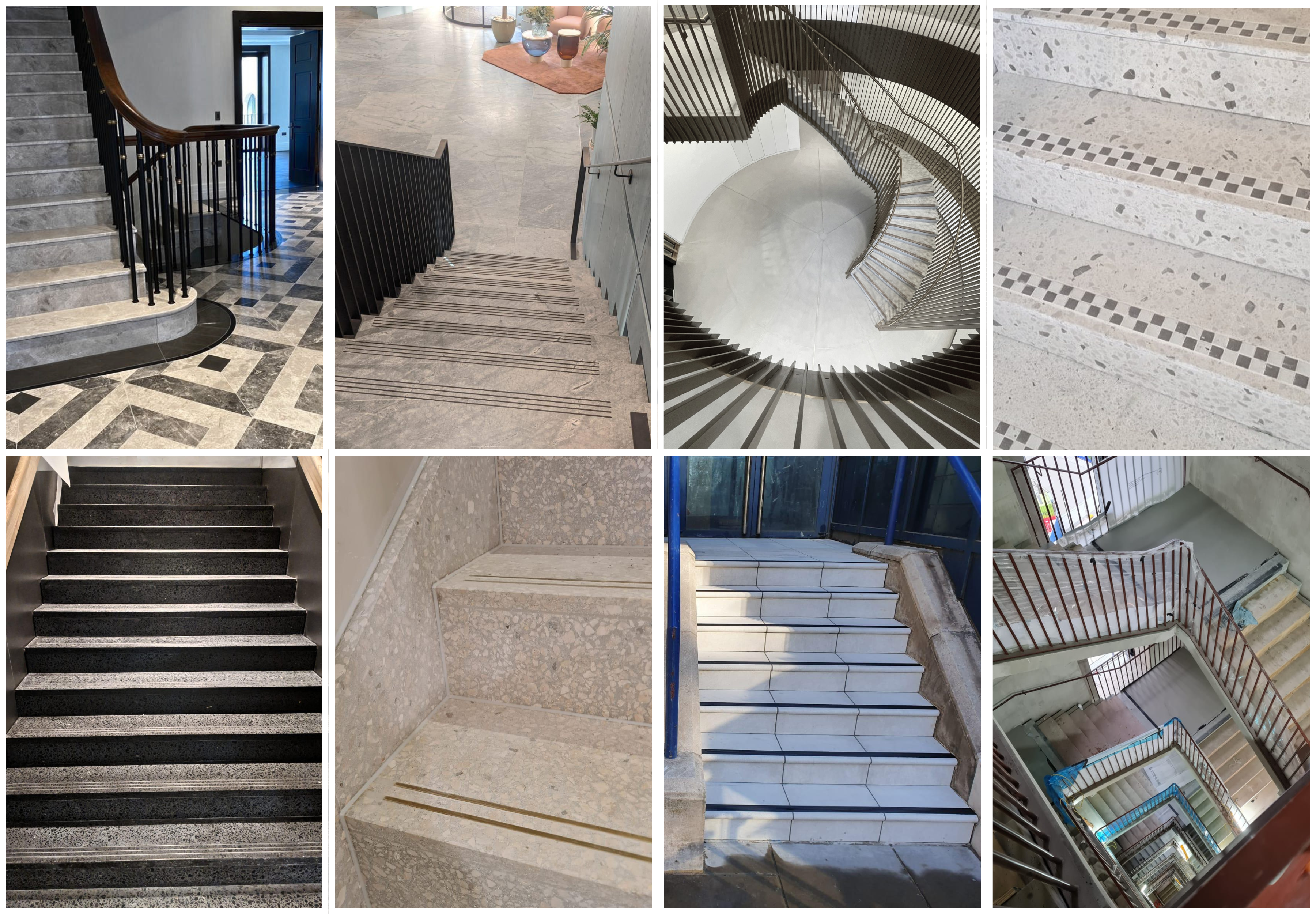
Substrates vary from project to project. We regularly work on both concrete and metal frame structures, each presenting different technical challenges. Metal frame staircases, for example, require tighter tolerance control and careful consideration of movement or deflection, both of which can affect levels and alignment.
Build-ups and interfaces also require careful coordination. Structural elements such as stringers, along with adjacent floor and wall finishes, must align correctly to ensure the staircase integrates seamlessly with the surrounding architecture.
Working with Materials
Material selection affects not only the appearance of a staircase, but also how it is installed and performs over time.
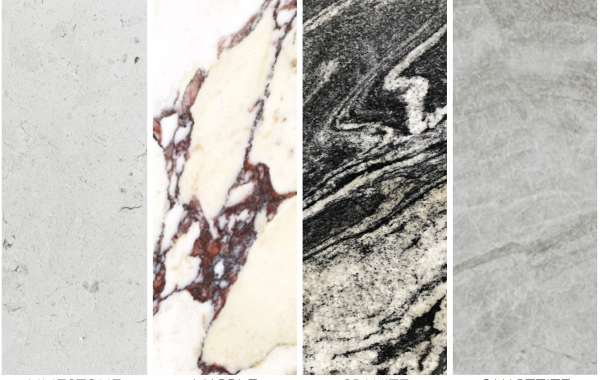
Our work includes natural stone such as limestone, granite and marble, alongside terrazzo, ceramic and concrete finishes. Each material behaves differently in terms of weight, movement and tolerances, so every installation requires a tailored approach.
Concrete finishes are poured and polished in situ, while natural stone requires careful slab selection and material control to achieve consistency in tone, movement and finish.
Regardless of the material, the objective remains the same: to create a uniform and continuous result across every step.
Designing for Performance
Performance forms a fundamental part of every staircase.
Staircases must comply with Building Regulations, particularly Approved Document K, which sets out requirements for safe access and movement between levels, including consistency of stair geometry. British Standards such as BS 5395 provide further guidance on stair design, dimensional relationships and acceptable tolerances.
Together, these standards define the parameters for rise, going and tread dimensions. Maintaining consistency across each flight helps minimise trip risks and creates safe, predictable movement throughout the building.
Slip resistance also plays a critical role. The industry typically assesses this using Pendulum Test Values (PTV) in accordance with BS 7976. In most environments, values above 36 are generally considered to represent a low slip risk, although some conditions may require higher performance levels.
We consider anti-slip solutions from the early design stages rather than adding them at the end. Depending on the project, these solutions may include stone inserts, mosaic strips, metal profiles or surface-applied treatments. Each solution must balance technical performance with the overall architectural design.
Working with What Already Exists
Not every staircase starts from scratch.
In refurbishment and phased projects, matching existing staircases can become one of the most challenging parts of the process. Materials may have aged differently, tones can vary, and previous installation methods may no longer match current construction standards.
Our approach focuses on careful analysis, material assessment and detailed coordination to minimise visible differences and maintain continuity between existing and new elements.
Sustainability in Practice
Sustainability often comes from small but considered decisions.
At 20 Grafton Street, we reused travertine offcuts generated during the fabrication of slabs elsewhere in the building. We processed the material into recycled aggregates and incorporated it into a bespoke terrazzo finish for the staircases. This approach reduced waste while maintaining consistency with the project’s wider material palette.
The binder itself can also contribute to sustainability. Our terrazzo mixes can incorporate specially formulated cement technologies that provide a more sustainable alternative to traditional Portland cement. These binders are produced at lower temperatures, helping reduce CO₂ emissions while still delivering strength, durability and long-term performance.
These decisions may not always be visible, but they influence both the environmental impact of the material and its long-term performance.
Conclusion
Delivering a staircase involves far more than applying a finish.
The process begins with understanding the substrate and continues through material selection, coordination, installation and long-term performance requirements. Every stage contributes to the final result.
Throughout the process, the focus remains the same: precision, consistency and a finish that performs as well as it looks.